

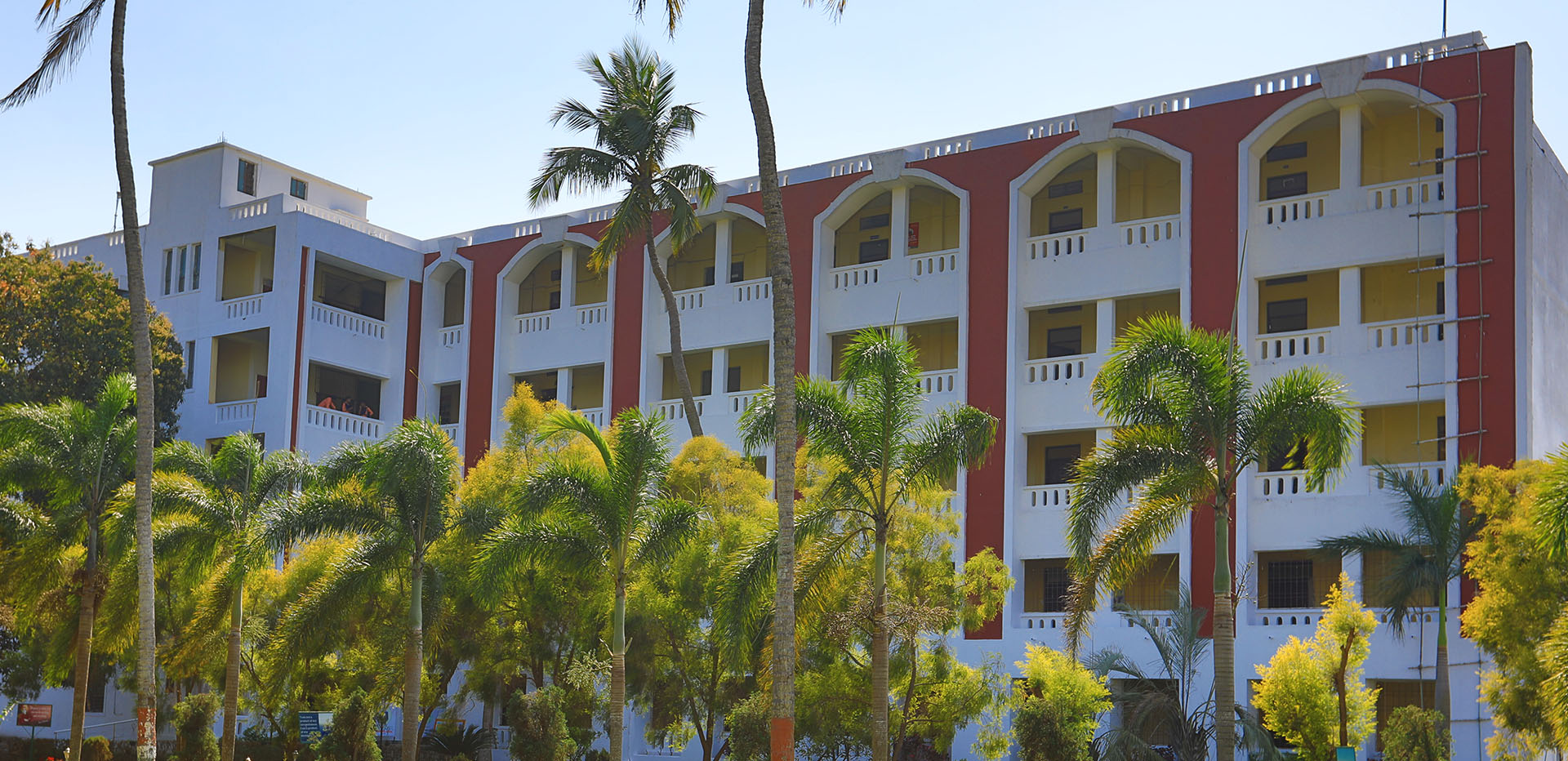

Institute Discipline
Institute Discipline
Students are expected to have a sense of belonging for the property of the institute and respect for all the members of academic community. The institute administration expects all its students to conform to the prevailing norms regarding discipline and general behaviour. Smoking, spitting, chewing of pan and Guthka in the campus is strictly prohibited. Use of alcoholic drinks within the premises is banned. Students must abstain from the use of drugs or any other narcotics. Every student must be punctual and regular in attending all classes and sessional tests. They are expected to participate in games, sports, cultural and co-curricular activities.
The institute has a disciplinary committee headed by a Professor. The disciplinary committee, by majority decision is empowered to suggest any action including expulsion from the hostel and institute.
Identity Card
Each student is issued a bar coded identity card at the time of his admission into the first year class to testify the holder’s status as a bonafide student of the institute. It is valid for the duration of the course. This must be carried along during the college time inside the campus and should be produced on demand by institute officials, including transport, library and examination staff. Failure to produce the IC may be deemed as trespass and the student may be treated as such. The IC once issued, remains valid for the entire period of study. Loss or damage of the IC should be reported immediately to the office of principal. A duplicate card is issued on verification and at a charge of Rs.100/-.
DISCIPLINARY CODE
The Procedure for student discipline may be invoked if a student is alleged to have committed any of the following.
- Assaulting or holding threat behavior to other student/Employee of the college.
- Damage to College property or the property of any student/ Member of staff/Visitors.
- Any action likely to cause injury to any person or impairing the safety of the college campus.
- Any criminal offence.
- A breach of equal opportunity policy including racial or sexual harassment, including ragging.
- Misappropriation or misuse of college Fund or assets.
- Abusive, antisocial, unreasonable behaviors.
- Behavior, likely to cause fear, distress and offence to others.
- Breach of University Regulations.
- Failure to comply with policies and directions relating to the effective functioning of the college.
- Abuse or attempt to abuse security, integrity and privacy of any files or confidential material (including computerized data bank of the college).
- Inviting outside elements to the college campus without the permission of the College authority.
- Attempt to persuade student to boycott or postpone university examination.
- Possession or use of any kind of alcoholic drinks, narcotics, unlawful drugs, possession of unlawful materials.
- Smoking inside the institution building campus.
Action by Principal for Breach of Discipline
When breach of college discipline is directly brought to the notice to principal, he may refer it to HOD/ Warden for action under the provision set out by the college.
- Finally the Principal shall appropriately dispose of the case.
- Warning the students in writing of the likely grave consequences for any further misconduct.
- Warning the students in writing of the likely grave consequence for any further misconduct.
- Reprimanding students in writing.
- Imposing fine on students.
- Suspension of students.
- Expulsion of students.
- A student has the right to appeal, against the action of Principal for suspension or expulsion, to the Chairman, but this appeal is not applicable in ragging cases. He should appeal in writing to the Chairman’s office.
Arrangement of chairs and tables must not be disturbed under any circumstances. Anybody found talking and causing disturbance in any manner, blocking the passage way may be fined at the first instance and deprived of library facilities if the offence is repeated. Anybody who wants photo copies of articles may get them inside the library, paying charges as fixed by the college.
ATTENDANCE REQUIREMENTS
The students have to regularly & punctually attend all classes (Lectures, Tutorials & Sessionals) in order to be eligible to appear in the University Examinations. Minimum 75% attendance is required for all theory and practical classes. However, 10% concession is allowed on medical ground Apart from attendance shortage, a student not attending classes without genuine reason, is liable to be fined Rs. 5.00 per day.
STUDENTS RESPONSIBILITY
Teaching and Learning is a partnership in which staff and students have to share responsibility. For the partnership to be viable, students need to make their own personal commitment of the learning process by.
- Taking advantage of the educational opportunities including contributing to and Group Projects.
- Attending all classes as required by their Courses and engaging with other students and teaching staff in intellectual debates and enquiry.
- Responding appropriately to course work date line and other assessment requirements.
- Conducting themselves in such a way as to ensure opportunities to all students to take part in college life through adherence to the policy of equal opportunities
- Contributing is their representation to the improvement of course organization & extra curricular activities.
- The Institute being a temple of learning students are required to maintain strict discipline inside the campus, class rooms, Institute buildings, Library and Hostels. It shall be the duty of the students to keep it clean. Chewing betel, spitting in the class rooms & smoking in the campus will be seriously viewed.
Anti-ragging rules
"Ragging means the doing of any act which causes, or is likely to cause any physical, psychological or physiological harm of apprehension or shame or embarrassment to a student, and includes – (a) teasing or abusing of playing Practical joke on, or causing hurt to any student or (b) asking any student to do any act, or perform any thing, which he/she would not, in the ordinary course, he willing to do or perform."
Actions to be taken against students for indulging and abetting in Ragging in technical institutions, Universities including Deemed to be University imparting technical education:
- The punishment to be meted out to the persons indulged in ragging has to be exemplary and justifiably harsh to act as a deterrent against recurrence of such incidents. The students who are found to be indulged in ragging should be debarred from taking admission in any technical institution in India.
- Every single incident of ragging a First Information Report (FIR) must be filed without exception by the institutional authorities with the local police authorities.
- Depending upon the nature and gravity of the offence as established by the Anti-Ragging Committee of the institution, the possible punishments for those found guilty of ragging at the institution level shall be any one or any combination of the following:-
- The institutional authority shall intimate the incidents of ragging occurred in their premises along with actions taken to the Council and immediately after occurrence of such incident and inform the status of the case from time to time
-
(i) Cancellation of admission
(ii) Suspension from attending classes
(iii) Withholding/withdrawing scholarship/fellowship and other benefits
(iv) Debarring from appearing in any test/examination or other evaluation process
(v) Withholding results
(vi) Debarring from representing the institution in any regional, national or international meet, tournament, youth festival, etc.
(vii) Suspension/expulsion from the hostel
(viii) Rustication from the institution for period ranging from 1 to 4 semesters
(ix) Expulsion from the institution and consequent debarring from admission to any other institution.
(x) Fine of Rupees 25,000/-
(xi) Collective punishment: when the persons committing or abetting the crime of ragging are not identified, the institution shall resort to collective punishment as a deterrent to ensure community pressure on the potential raggers.
Examination and Attendance
Every student has to maintain a minimum 75% attendance in each theory class. A student who has been absent on medical grounds may be allowed to appear an examination, provided he/she has attended at least 65% of classes and
-
(i) appeared before a medical board and
(ii) the Principal recommended the case for such relaxation. Non-fulfillment of attendance requirement may result in the loss of an academic year. Reports on attendance shortage are regularly brought to the notice of the concerned student and parent.
Students have to satisfy the eligibility criteria for appearing in examination as laid down in the academic regulations of BPUT. Every theory course consists of 3 class tests each of 10 percentage points and one end semester examination of 70 percentage points. Permission to appear the internal and end semester examination is subject to fulfillment of attendance and other requirements.
Curriculum
The institute follows the BPUT prescribed curriculum, which is consistent with the model curriculum suggested by the AICTE. The present curricula have a broad based core science and technically component, departmental compulsory courses, professional electives and project dissertation. The credit requirement is 200-235 for graduation. Details of the curriculum are available at www.bput.ac.in and the institute website.
As per the prevailing regulations, B.Tech programme is Four years (Eight Semesters). A weaker student can complete a four year programme in not more than seven years.
Rules for examinations
- Each discipline consists of the following four types of items:
- Theory Items
- Practical Items
- Sessional Items
- Project Items
The schedule of these items along with their credit points for each semester shall be as per rules formulated by the Academic Council from time to time.
- At the end of each semester, there shall be an examination (hereinafter called end-semester examination) conducted by the University as per programme announced at the beginning of each academic year.
- Back paper examinations, if any, shall be held with the normal end semester examination.
- Students with backlogs shall clear their backlog subjects along with regular students of lower semester(s) in subsequent year or in the same year if a subject is offered in both semesters